2026-05-29
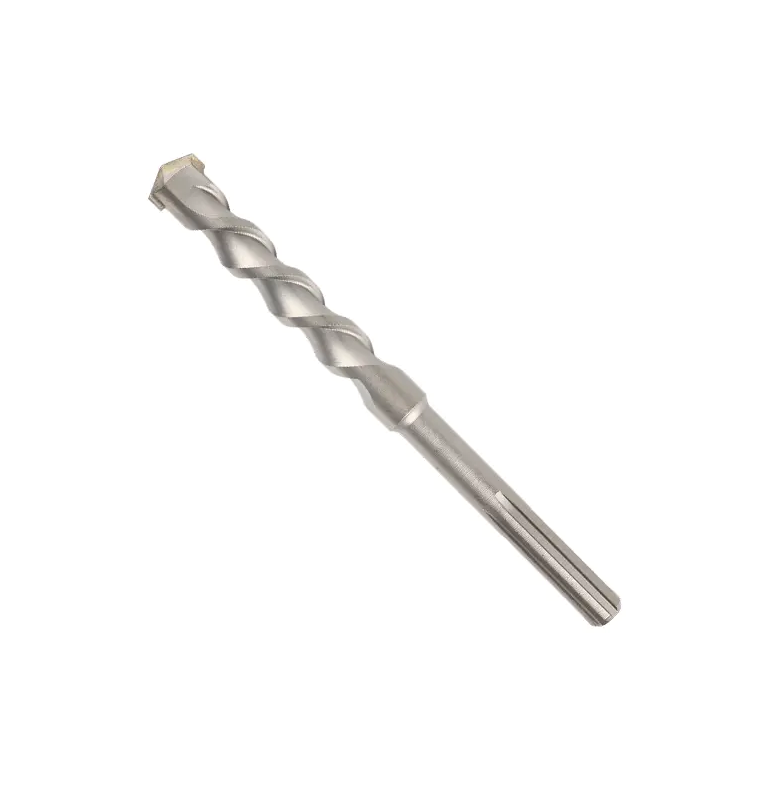
SDS Plus hammer drills are widely used in construction, installation work, and renovation projects. Behind every tool on the market, there is a manufacturing process that shapes its durability, stability, and overall performance.
Choosing a reliable factory is not just about price comparison. It is about understanding how the production system works, how quality is controlled, and how consistent the output remains over time. A good factory relationship often affects product stability more than any single specification.
Before comparing suppliers, it helps to understand what kind of product is being produced. An SDS Plus hammer drill is not a simple assembly of parts. It involves mechanical structure, impact performance design, and long-term wear resistance considerations.
Factories that produce this type of tool usually deal with multiple production stages. These may include component preparation, assembly lines, testing procedures, and final inspection processes.
A reliable factory is often not defined by appearance, but by how controlled and repeatable its production flow is.
Consistency is often more important than individual product performance. A single good sample does not guarantee stable mass production.
In real sourcing practice, buyers often focus on whether each batch behaves the same way. Even small variations in assembly can affect tool balance, vibration level, or operational smoothness.
Factories with stable processes usually show:
Consistency is usually a sign of mature production management.
The choice of materials directly shapes how long‑lasting a hammer drill is and how well it performs with regular use. Different internal and outer parts need materials that meet separate quality standards for drill production.
Trusted manufacturers carefully manage where they source raw materials and how those materials are handled during production. It's not just about picking strong enough materials; it's about making sure they stay stable even with long‑term heavy‑duty use.
When checking a factory's quality standards, look for organized, traceable material management instead of messy, inconsistent handling.
Key signs of proper material control include:
How strictly a factory controls its materials usually shows how seriously it takes long‑term product reliability.
A factory's production process is what keeps product quality steady. Even with high‑grade raw materials, disorganized workflow can hurt the final quality of hammer drills.
Making SDS Plus hammer drills relies on multiple connected production steps. If one step is done poorly or inconsistently, every following process gets impacted.
Well‑structured factories run each stage smoothly. Staff know their exact tasks, and parts move through assembly without unnecessary delays or mistakes.
A consistent workflow brings these practical benefits:
Good workflow doesn't mean rushing production. It means keeping every step controlled and consistent.
Quality control is often where differences between factories become most visible.
Some factories rely heavily on final inspection. Others integrate checks throughout the production process. The second approach often creates more stable results because issues are identified earlier.
A reliable SDS Plus Hammer Drill Factory typically does not treat quality control as a single step. It appears throughout the process.
Common signs of structured control include:
Quality control is less about complexity and more about repetition and discipline.
Communication is often underestimated in supplier selection. However, it reflects how organized a factory is internally.
A reliable factory usually responds with clarity and consistency. Information does not change frequently without explanation. Technical questions receive structured answers instead of vague responses.
Good communication behavior may include:
Communication does not guarantee product quality, but it often reflects internal order.
Most buyers today need tailored products, whether it's custom branding, special packaging, or adjustments to match their target market positioning.
Factories that can carry out custom orders without issues usually run more adaptable production lines. This doesn't always mean the factory is huge, but it proves they have solid control over their manufacturing processes.
Good customization relies on smooth coordination between customer design requests, production tweaks, and finished‑product packaging.
Signs that a factory handles customization well:
Manufacturers that balance regular bulk orders and custom OEM work well generally have more stable, well‑developed production systems.
Testing is where product reliability becomes visible. It shows how the factory verifies performance before shipment.
For hammer drills, testing may involve functional operation checks, durability simulation, and assembly verification. The goal is not only to detect defects but to ensure consistent output.
Reliable factories usually integrate testing into multiple stages instead of relying on a final check alone.
Typical testing behavior includes:
The more integrated the testing process, the more stable the final product tends to be.
Packaging is often the last step, but it reflects the same discipline as production.
A well-organized factory treats packaging as part of the quality chain. Poor handling at this stage can damage even well-made products.
Careful packaging practices may include:
It may seem simple, but packaging often reveals attention to detail across the entire system.
Choosing a factory is not only about the first order. It is also about whether long-term cooperation feels stable.
Over time, reliable factories show predictable behavior in delivery, communication, and product consistency. Changes still happen, but they are communicated clearly.
Long-term potential often becomes visible through:
Trust in manufacturing is usually built step by step, not in a single transaction.
Selecting an SDS Plus hammer drill factory is not about finding a single standout factor. It is about observing how multiple elements work together.
Material control, workflow stability, communication clarity, testing structure, and packaging discipline all contribute to the final result.
A reliable factory usually does not rely on one strong point. Instead, it shows balance across different parts of production.
When these elements align, product consistency becomes more predictable, and cooperation becomes smoother over time.
KEEP IN ToUCH

Rongcheng specializes in manufacturing and exporting wood planer bits, auger bits, shovel bits, spade bits, chisels, hammer bits and carbide, etc.
contact us
Address: Shangbutou, Qingjiang, Yueqing, Zhejiang, China
Tel: +86-577-62271200
FAX: +86-577-62276882
E-mail: [email protected]
Follow us

Carbide Hammer Drill Tools Manufacturer

 English
 русский
 Español
 中文简体
中文简体