2026-06-05
Furniture production depends on how wood is shaped at the earliest stage. Before polishing, coating, or assembly, there is one step that quietly sets the tone for everything that follows: cutting. In Milling Cutter for Wood Factory , milling cutters carry that responsibility. They touch the material directly, guide the shape, and influence how the surface will behave later.
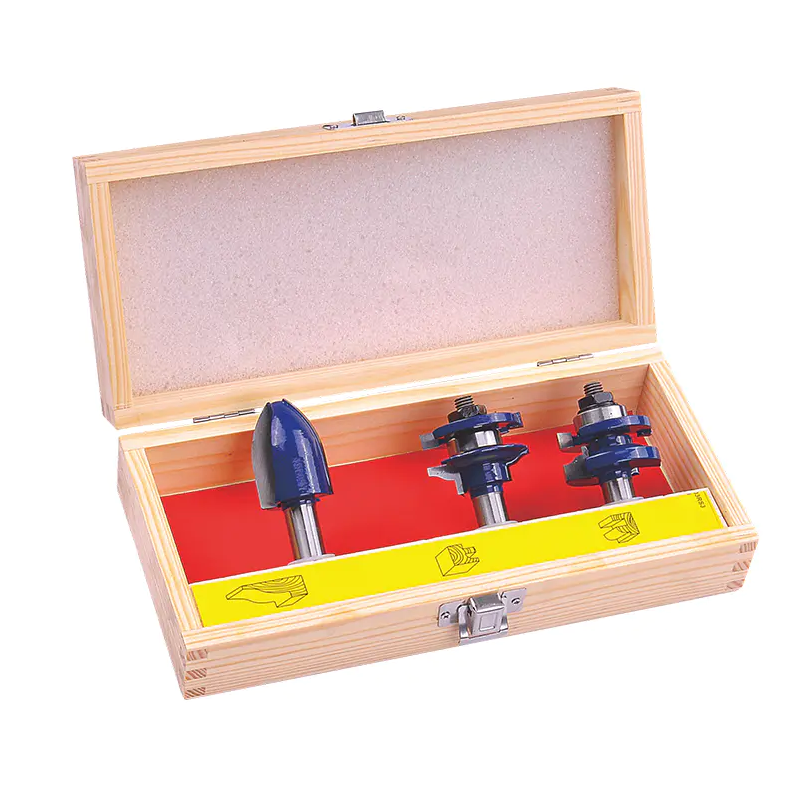
On the surface, cutters may look like simple metal tools. In practice, small differences in their condition or structure can change how furniture parts feel, look, and fit together.
Wood does not behave in a fixed way. It reacts during contact. Pressure, direction, and speed all play a role. The milling cutter is the point where control meets material.
When the cutter is in a stable condition, the wood tends to separate in a cleaner way. The surface feels more even, and edges stay closer to the intended shape. When the cutter is not in good condition, the material may respond unevenly.
In a production line, this shows up quickly. A table edge that looked fine in one batch may feel slightly different in the next. A cabinet panel may need extra correction before finishing. These small changes usually trace back to the cutting stage.
Sharpness is often the first thing people notice, even if they do not think about it directly.
A sharp cutter moves through wood with less interruption. The material parts cleanly, leaving a smoother surface behind. The cut line looks more defined, and the shape stays closer to the original design.
When sharpness drops, the interaction changes. Instead of a clean split, the tool begins to press and drag slightly. The surface may show light tearing or uneven texture.
Typical results of reduced sharpness include:
These changes do not always appear immediately. They often become more noticeable after repeated use.
Shape affects how the cutter enters and leaves the wood. Even if two tools are made from similar materials, their behavior can feel different during operation.
Some cutter designs guide material away more smoothly. Others focus on faster removal of wood. In furniture production, smoothness often matters more than speed.
Shape influences:
A small adjustment in geometry can shift the final surface result more than expected.
When a cutter rotates evenly, the contact with wood stays steady. This helps maintain a uniform surface across the entire workpiece.
If balance is slightly off, even if it is not visible, the machine can produce a mild vibration. That vibration travels into the wood surface.
The result may appear as:
These effects are subtle at first. They become clearer on larger surfaces or longer production runs.
Wear does not happen in a single moment. It builds step by step through repeated contact.
At the beginning, the change is hard to notice. The cutter still performs in a familiar way. As use continues, small differences begin to appear.
Common signs of wear include:
In furniture production, this often shows up as extra sanding or adjustment work later in the process.
Consistency is one of the main concerns in factory work. Customers expect similar appearance across multiple pieces. Even small variation can stand out when furniture is placed side by side.
A stable cutter helps maintain similar results across batches. When the cutter condition changes, variation can appear even if the machine settings remain the same.
A simple comparison helps explain this:
| Cutting condition | Result in production |
|---|---|
| Stable cutter | Similar surface and edge across batches |
| Slight wear | Small differences in texture appear |
| Advanced wear | Noticeable variation in shape and finish |
The cutter becomes a hidden factor behind repeatability.
Maintenance is often less visible than the cutting process itself, but it has a direct effect on output.
When cutters are cleaned regularly, residue does not build up on the surface. This helps keep contact with wood more stable. When they are stored properly, the edge condition stays more predictable.
Common practices include:
These steps do not change the cutter itself, but they help preserve its behavior over time.
Not all furniture parts react the same way to cutting variation.
Simple flat surfaces may hide small imperfections. The difference may only be noticed under close inspection. More detailed designs react differently.
Curved edges, decorative profiles, and visible corner joints tend to show variation more clearly. A slight change in cutting behavior becomes easier to notice.
In practical terms:
This is why some products require more careful cutter control than others.
In many factories, evaluation does not rely on complex tools. It comes from daily experience.
Operators often notice changes through:
These small signals build a clear picture over time. Even without measuring instruments, experienced workers can sense when a cutter begins to change behavior.
The milling cutter sits at the beginning of the production chain, but its influence reaches the end result.
When performance is stable, production flows more smoothly. Surfaces require less correction. Pieces match each other more closely. The workflow feels more predictable.
When cutter condition shifts, the effect spreads. Extra finishing work appears. Small differences between batches become more visible. Production rhythm may require adjustment.
It is not a dramatic change in one step, but a gradual influence that builds through repetition
KEEP IN ToUCH

Rongcheng specializes in manufacturing and exporting wood planer bits, auger bits, shovel bits, spade bits, chisels, hammer bits and carbide, etc.
contact us
Address: Shangbutou, Qingjiang, Yueqing, Zhejiang, China
Tel: +86-577-62271200
FAX: +86-577-62276882
E-mail: [email protected]
Follow us

Carbide Hammer Drill Tools Manufacturer

 English
 русский
 Español
 中文简体
中文简体