2026-05-22
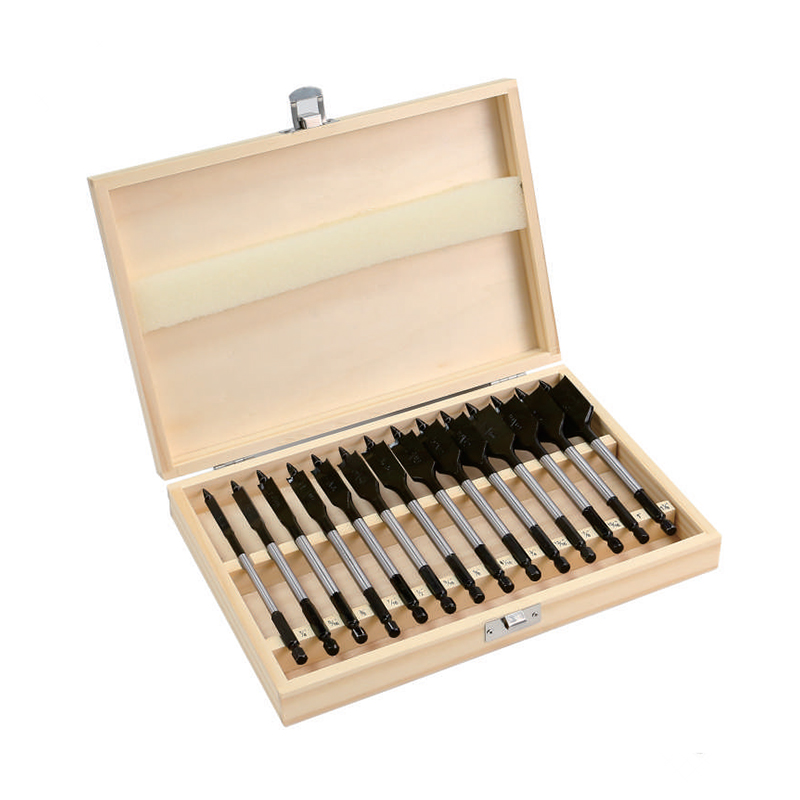
Wood Drill Bit Factory might seem like small tools, easy to overlook. But anyone who has worked on furniture, cabinetry, or even craft projects knows they can quietly make or break the outcome. A drill bit that doesn't perform consistently can ruin a piece of wood or slow down production. And when you are sourcing them in bulk, choosing the right factory is more than just comparing prices or pictures.
There are so many factories now. Some look neat in photos, others have glossy brochures. But how do you tell which ones will actually deliver products that meet your expectations? It's rarely obvious at first glance. You have to dig a bit deeper, observe, and even trust your instincts.
You can't judge a factory just by how big it is or how shiny the machines look. What matters is how it organizes its work and how its people approach it. When you visit or even see pictures, notice small things: are the worktables tidy? Are tools arranged logically or just scattered around? Do the workers seem confident handling the equipment? These may seem like minor details, but they speak volumes about the overall discipline of the operation.
Another thing is consistency. If the factory produces a dozen drill bits, do they all look the same? Slight differences in finishing or sharpness can hint at whether the quality is controlled or left to chance. Even packaging tells a story. Boxes that are neat, labels clear, and products protected show that the factory cares about the details.
I've seen situations where a factory had excellent machines, but the products came out uneven. On the other hand, a smaller, seemingly modest workshop sometimes delivered the most uniform drill bits because the people were meticulous. It's not always the size or reputation; it's the attention to detail.
Experience isn't just about years in business. It's about knowing how different woods react under pressure. Soft pine behaves differently from oak or maple. A factory that has handled multiple types of wood drill bits tends to understand these subtleties.
Yet, experience alone can mislead. Some factories rely so heavily on old habits that they are slow to adjust to a new design or specification. Others use their experience as a foundation but remain flexible, experimenting with new methods or small adjustments to meet unique requirements.
A simple way to gauge experience is to ask about past projects. Not for a name-drop, but to see how the factory describes challenges and solutions. If they can explain a problem they solved for a customer, it tells you they've faced unexpected situations and found practical solutions.
A drill bit's material determines its performance. That's something many buyers underestimate. A slight variation in metal quality affects smoothness, durability, and the finish of the wood.
Some factories focus on cost, choosing materials that keep the price low. Others consider performance, selecting metals or coatings suitable for different applications. You can't always see this on a spec sheet, but handling samples helps. Feel the metal, check the edges, even tap lightly to get a sense of density. These small tactile checks reveal a lot.
Factories that willingly discuss material sourcing are usually confident in their work. They aren't trying to hide anything, which is reassuring. Transparency here is often a reliable signal of overall reliability.
It's surprising how often communication is overlooked. Yet, it can influence everything from production speed to the quality of the finished drill bits.
A factory that answers your questions promptly and clearly usually operates in a structured manner. Vague or overly complex replies can be a warning sign. Early interactions often reveal patterns. If they clarify uncertainties, follow up when promised, and are upfront about limitations, they are easier to work with in the long run.
I've noticed that when a factory struggles with communication at the start, production tends to follow the same pattern: delayed responses, misunderstood specifications, and, eventually, mistakes. Early clarity is key.
Sometimes you don't get detailed technical sheets. Even when they exist, they may not reflect real-world performance. That's why testing samples is crucial.
Hold a drill bit. Examine its surface, edges, and balance. Drill a few holes in a scrap piece of wood. Observe how it behaves: does it start smoothly? Is there chatter? Does it leave clean holes? Comparing several samples can highlight consistency issues. One perfect piece doesn't guarantee that the next dozen will be the same.
This step might feel tedious, but it's often the single most telling part of factory evaluation. Many buyers skip it, assuming that visual inspection or photos are enough. Experience shows it isn't.
Capacity isn't just about how many pieces a factory can make. It's about how it manages workflow and pressure.
A small factory might excel with a hundred pieces but struggle with a thousand. A huge factory might handle thousands but overlook smaller custom orders. The ideal scenario is balance: the factory can scale up or down depending on your needs without compromising quality.
Ask how the factory handles busy periods. Some maintain steady output even when many orders come in; others slow down or rush, affecting consistency. Understanding this early can save headaches later.
Not every project is standard. Some require unusual sizes, shapes, or packaging. A factory's ability to adapt says a lot about its internal coordination.
Factories that ask detailed questions, provide sketches or mockups, and offer feedback usually manage customization better. Those that simply say "we only do standard sizes" may leave you with a product that doesn't fit your exact requirements.
Early discussions set expectations. Clarifying requirements up front avoids surprises when production begins.
Price is always part of the conversation, but it's rarely the whole story. Extremely low prices might seem appealing but can mean compromises elsewhere: materials, consistency, or attention to detail.
Value includes reliability, communication, quality, and flexibility. Paying a bit more for smooth collaboration can save more in time and frustration than chasing the cheapest option.
Look for patterns. If a factory's prices are significantly below market averages, ask why. If they're slightly higher, check what you're getting in return—sometimes it's peace of mind.
Seeing a factory in action is invaluable. Walk through production areas, observe workflows, and see how staff interact with tools. Clean, organized spaces often indicate care and structure.
If a visit isn't possible, virtual tours work too. Even video calls reveal a lot: how tools are stored, how staff manage orders, and how the process flows. Small things—like how carefully products are packed or whether items are handled roughly—can tell you volumes.
Strong QC isn't always obvious. Factories with structured routines check products at several points. Issues are spotted early instead of waiting for final inspection.
Documentation matters. Organized records show a methodical approach. Factories that respond constructively to feedback tend to maintain standards consistently. Those that avoid concerns or downplay issues may have deeper systemic problems.
Building a Stable Relationship
Choosing a factory isn't the end—it's the start of collaboration. Define expectations, timelines, and communication methods clearly. Frequent updates help avoid misunderstandings.
Trust grows gradually. Consistent delivery, transparency, and responsiveness create a partnership that eases future projects. Over time, such relationships become a reliable asset, making sourcing less stressful.
| Aspect | What to Look For | Why It Matters |
|---|---|---|
| Production Consistency | Uniform performance across batches | Reduces surprises |
| Communication Style | Clear, timely, and direct | Avoids misunderstandings |
| Material Transparency | Open discussion on materials | Impacts durability and results |
| Customization Ability | Willingness to adapt designs | Supports unique project needs |
| Production Capacity | Balanced and adaptable | Helps meet deadlines |
| Quality Control | Structured and thorough | Maintains reliability |
| Price vs. Value | Fair pricing with focus on outcomes | Supports smoother cooperation |
KEEP IN ToUCH

Rongcheng specializes in manufacturing and exporting wood planer bits, auger bits, shovel bits, spade bits, chisels, hammer bits and carbide, etc.
contact us
Address: Shangbutou, Qingjiang, Yueqing, Zhejiang, China
Tel: +86-577-62271200
FAX: +86-577-62276882
E-mail: [email protected]
Follow us

Carbide Hammer Drill Tools Manufacturer

 English
 русский
 Español
 中文简体
中文简体