 English
 русский
 Español
 中文简体
中文简体

Glass drilling looks like a simple task when viewed from the outside. A drill bit is placed on a tool, the tool is guided toward the surface, and a hole is created. In actual use, however, the choice of drill bit can involve several different considerations.This is one reason Glass Drill Bit Price can vary between products.
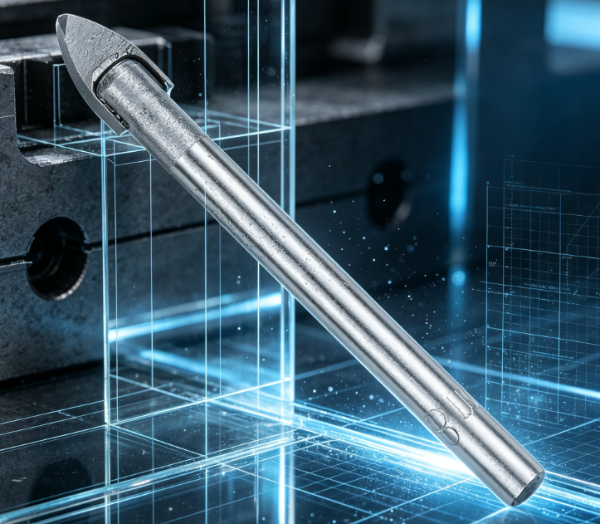
Two drill bits may appear similar in a product catalog. Their prices may still be different. The reason is not always related to size or appearance. Materials, product design, manufacturing methods, intended applications, and purchasing requirements can all influence the final price.
For buyers, this makes price comparison more complicated than simply looking at two numbers. A lower price may reflect a simpler product design or a different intended use. A higher price may be connected with additional manufacturing work, material selection, or a product designed for a particular working condition.
Understanding these differences can make the purchasing process more practical. It also gives distributors, contractors, and other industry buyers a clearer way to discuss glass drill bits with suppliers.
What Factors Affect Glass Drill Bit Price ?
The price of a glass drill bit usually comes from several parts of the product and its production process. There is rarely one single factor that explains the entire difference.
Material is one important consideration. Different materials can have different costs and may require different production methods. The choice of material also affects how a drill bit is intended to be used.
Product structure matters as well. A simple drill bit may be designed for general applications, while another product may include a more carefully developed structure for a specific type of work. More production steps can influence the cost of the finished item.
The intended application also plays a role. Drilling glass for occasional maintenance is not necessarily the same as drilling glass as part of a regular production process. Buyers may therefore look for different characteristics even when the basic product name remains the same.
Packaging, order quantity, quality inspection, and production arrangements can also contribute to price differences.
| Price factor | Why it may influence the price |
|---|---|
| Material choice | Different materials have different costs and production requirements |
| Product design | More complex designs may require additional manufacturing work |
| Application | Different uses can require different product characteristics |
| Manufacturing process | Production steps can vary between product types |
| Order quantity | Purchasing volume can affect production and packaging arrangements |
| Quality control | Different inspection requirements may add to production work |
| Packaging | Individual or customized packaging can affect the final cost |
This means Glass Drill Bit Price should be viewed as the result of several connected choices rather than an isolated number.
How Does Material Choice Influence Glass Drill Bit Price?
The material used in a drill bit affects more than the appearance of the product. It can influence manufacturing cost, expected use, and the way the product is positioned in the market.
Some glass drilling applications call for a product designed around general use. Others may require a drill bit intended for more demanding working conditions. The material selection can change according to these requirements.
Material processing is another consideration. A material may need additional shaping, forming, or finishing before it becomes part of a finished drill bit. Each production stage can add to the manufacturing workload.
Buyers may notice that two products with a similar appearance have different prices because their internal material choices are not the same. Looking only at the outer shape can therefore provide an incomplete picture.
This is especially relevant when purchasing for repeated use. A buyer may care about how a drill bit fits a particular workflow rather than simply finding the lowest available price.
Material choice should therefore be considered together with application. A product that uses a different material is not necessarily intended to compete directly with another product at a different price point. The two may have been developed for different purchasing needs.
Why Does Product Design Make Glass Drill Bit Price Different?
Design is another major reason for price variation.
A glass drill bit needs to work with the way a user approaches the glass surface. Its shape, working end, connection method, and overall structure can influence how the product is handled.
A relatively simple design may require fewer production steps. A more specialized design may involve additional forming, joining, finishing, or inspection.
These differences are not always obvious in a photograph.
A buyer looking at an online catalog may see two drill bits with similar shapes. The manufacturing process behind them can still be quite different. One may be produced for general drilling work, while another is developed around a narrower application.
Design also affects packaging and product handling. A drill bit intended for individual professional use may be presented differently from a product sold as part of a larger tool range.
This is why price should not be separated from product purpose. The design gives some indication of what the manufacturer expects the product to do.
For procurement teams, asking about the intended application can be more useful than asking about price alone. It can help narrow the product range before detailed price comparisons begin.
Can Different Applications Lead to Different Glass Drill Bit Prices?
They can.
Glass is used in many different settings, and drilling requirements can change from one situation to another. A product used for occasional repair work may have different design priorities from one used in a regular workshop.
The working environment can also affect product selection. Some users need a drill bit for a specific glass-related task. Others may need a product that fits into a broader range of jobs.
This creates different market segments within the same basic product category.
Consider these common purchasing situations:
- Occasional maintenance
The buyer may focus on straightforward use and reasonable purchasing cost. - Workshop applications
The buyer may pay more attention to consistency, handling, and compatibility with regular work. - Professional installation
The product may need to fit a particular installation process and working routine. - Repeated commercial use
The buyer may compare products based on how well they fit ongoing purchasing and production needs.
The drill bits used in these situations do not necessarily need to have the same design.
As a result, Drill Bit Price can change according to the application for which the product is intended. The price difference may reflect a difference in purpose rather than a simple difference in product quality.
How Does Manufacturing Process Affect Glass Drill Bit Price?
Manufacturing has a direct connection with product cost.
A drill bit passes through several stages before it reaches the buyer. Materials need to be prepared. Components may need to be shaped or joined. The working surface may require finishing. Products may then go through inspection and packaging.
Not every product follows exactly the same production route.
A simple product can require fewer operations. A more specialized drill bit may need additional processing. When the production process becomes more involved, labor, equipment use, material handling, and inspection can all become part of the final cost.
Production consistency is another consideration. Manufacturers need to manage raw materials and production steps so that products remain within their intended design. Inspection adds another layer to the manufacturing process.
For buyers, this helps explain why products with similar visual characteristics can carry different prices.
The difference may come from what happens inside the factory rather than what is visible on the finished product.
This is also why price discussions between manufacturers and buyers often include more than the product itself. Packaging requirements, production arrangements, order quantities, and inspection expectations can all affect the final quotation.
What Role Does Order Quantity Play in Glass Drill Bit Price?
Purchasing quantity can change the way a supplier organizes production.
A small order may be handled differently from a larger purchasing plan. Production scheduling, material preparation, packaging, and order management can all change with volume.
For a buyer, this means the price of one drill bit does not always tell the complete story of a potential purchase.
A business purchasing for regular distribution may approach a supplier differently from an individual buyer. The distributor may need consistent packaging, repeated supply, or several product variations. These requirements can influence the commercial arrangement.
Bulk purchasing can also make production planning easier in some situations. When products are manufactured together, certain preparation and packaging activities can be organized more efficiently.
However, purchasing quantity should not be treated as the only path to a lower price. Product design, material selection, packaging, and order requirements still matter.
A useful purchasing discussion can therefore include:
- Expected order quantity
- Product variations
- Packaging requirements
- Intended application
- Delivery arrangement
- Repeat purchasing needs
These details give suppliers a clearer picture of the order. They also help buyers compare quotations on a more consistent basis.
Why Should Buyers Look Beyond Glass Drill Bit Price?
Price is easy to compare because it is presented as a clear number. Product suitability is harder to measure because it depends on how the drill bit will actually be used.
This is where buyers can sometimes face difficulties.
A cheaper product may appear attractive during an initial comparison. If it does not match the intended application, the initial saving may not provide the expected purchasing value. A more expensive product may also be unsuitable if its design does not fit the user's workflow.
The important question is therefore not simply, "Which product costs less?"
A more useful question can be, "Which product fits the intended application and purchasing requirements?"
This approach does not mean ignoring price. It means placing price within a wider purchasing context.
Buyers can compare products according to several areas:
| Comparison area | Questions buyers can consider |
|---|---|
| Application | Is the drill bit intended for the planned glasswork? |
| Design | Does the structure suit the way it will be used? |
| Material | Is the material appropriate for the intended application? |
| Manufacturing | Is the production approach suitable for the product category? |
| Quantity | Does the purchasing volume match the supplier's production arrangement? |
| Packaging | Does the packaging fit storage and distribution needs? |
| Supply | Can the product fit the buyer's purchasing schedule? |
This kind of comparison gives Drill Bit Price more context. It also helps prevent a purchasing decision from being based on a single number.
How Can Buyers Compare Glass Drill Bit Price More Clearly?
A useful comparison starts with similar products.
Comparing a general-purpose glass drill bit with a product designed for a different application can create confusion. The products may share a category name but serve different needs.
Buyers can begin by defining the actual use. What type of glass-related work will the drill bit support? How often will it be used? Will it be purchased for individual use, workshop work, installation, or distribution?
Once these questions are clear, buyers can ask suppliers for quotations based on the same product requirements.
It is also helpful to confirm what is included in the quoted price. Packaging, product variations, order quantities, and other purchasing conditions can affect the final commercial arrangement.
For businesses that purchase repeatedly, the comparison can go one step further. Instead of looking at one order in isolation, buyers can consider whether the product and supplier fit their longer purchasing process.
This can make discussions more straightforward.
A supplier can explain why one Glass Drill Bit Price differs from another when the buyer provides clear information about the intended product. The buyer, in turn, can compare quotations based on the same requirements rather than comparing unrelated products.
The price difference then becomes easier to understand.
Rather than treating Glass Drill Bit Price as a fixed figure that should look the same across every product, the market can be viewed through the needs behind each drill bit. Material, design, production, application, quantity, and purchasing conditions all have a place in that discussion. When those factors are considered together, the difference between two prices becomes part of the product story rather than a mystery on a quotation sheet.