2026-02-06
Wood Drill Bits are specifically designed to create precise holes in wood materials, but their performance can vary significantly depending on the drilling depth. Shallow drilling generally poses fewer challenges, allowing the bit to maintain accuracy and clean cuts. However, as the depth increases, several factors can affect efficiency, including bit design, material hardness, and chip removal. Knowing how a Wood Drill Bit behaves at different depths helps craftsmen and DIY enthusiasts avoid common problems like wandering, splintering, or overheating. Selecting the appropriate bit length and type ensures suitable performance for each specific task.
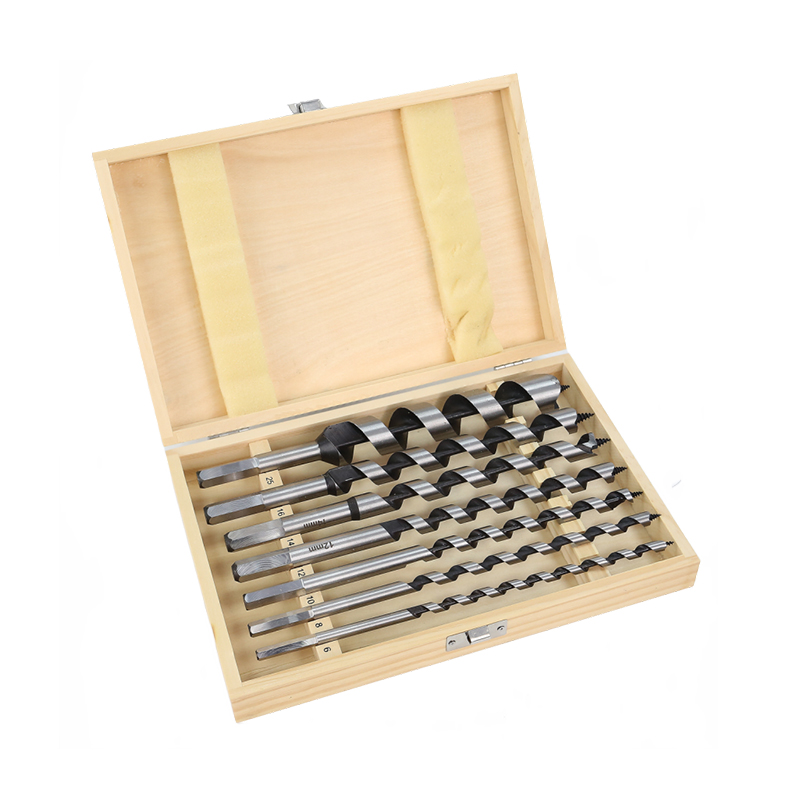
Shallow drilling typically involves depths up to a few centimeters, such as for pilot holes or screws. At these depths, most standard Wood Drill Bits perform efficiently and require minimal adjustments. The shorter contact area reduces friction, making it easier to maintain smooth rotation and prevent heat buildup. Precision is generally higher at shallow depths, and the risk of material splintering is lower. Users can focus on maintaining straight alignment without the need for additional support, making shallow drilling ideal for cabinetry, furniture assembly, and decorative woodworking.
Medium-depth drilling, often ranging from a few centimeters to around 10–15 centimeters, introduces more challenges for Wood Drill Bits. Chip removal becomes more critical because accumulated wood shavings can increase friction, reducing cutting efficiency and causing heat generation. For these depths, bits with spiral flutes or auger designs are preferred, as they facilitate smooth chip evacuation. Maintaining steady pressure is essential to prevent the bit from wandering or veering off course. Medium-depth drilling is commonly used for creating dowel holes, door hinge placements, or pre-drilling for screws in thicker wooden boards, where precision and cleanliness of the hole are crucial.
Deep drilling, beyond 15 centimeters, requires specialized Wood Drill Bits or step bits designed to maintain accuracy and reduce heat. At these depths, friction increases substantially, and the risk of wood splitting, overheating, or dulling the cutting edges grows. Using longer bits without proper support can cause wobbling, misalignment, or binding within the hole. Techniques such as incremental drilling—removing the bit periodically to clear chips—are essential to maintain performance. Additionally, choosing high-quality Wood Drill Bits made from hardened steel or with specialized coatings ensures durability and smooth cutting, even under demanding conditions.
The selection of a Wood Drill Bit should consider both the material and the desired hole depth. Shallow and medium depths can often use standard bits, but deep holes demand auger or brad-point designs to ensure precision and reduce friction. Matching bit diameter to the screw or dowel size is equally important, as incorrect sizing can cause splitting or inadequate fastening. Users should also consider the drill’s power and speed settings to optimize performance for each depth, ensuring consistent results.
Wood Drill Bit suitability varies significantly with drilling depth, requiring careful consideration of bit design, material type, and drilling technique. Shallow holes are generally straightforward, medium depths demand effective chip removal, and deep drilling necessitates specialized bits and techniques. Understanding these differences ensures precision, efficiency, and durability, allowing both professionals and DIY enthusiasts to achieve suitable results across all woodworking projects.
KEEP IN ToUCH

Rongcheng specializes in manufacturing and exporting wood planer bits, auger bits, shovel bits, spade bits, chisels, hammer bits and carbide, etc.
contact us
Address: Shangbutou, Qingjiang, Yueqing, Zhejiang, China
Tel: +86-577-62271200
FAX: +86-577-62276882
E-mail: [email protected]
Follow us

Carbide Hammer Drill Tools Manufacturer

 English
 русский
 Español
 中文简体
中文简体