2026-11-13
A drill bit that cuts cleanly through pine may behave quite differently when used on oak, plywood, or veneered boards. Even two bits with the same diameter can produce different results. One leaves a clean hole, while the other tears the surface or wanders away from the intended position.
The difference often comes down to the shape of the tip, cutting edges, and flutes. These details determine how the bit enters the wood, removes material, and handles chips during drilling.
The Shape of the Point Determines How the Bit Enters Wood
The tip is the first part of the drill bit to contact the workpiece. Its shape affects positioning and how the wood fibers are cut.
Brad-point bits are designed for accurate woodworking. Their center spur locates the drilling position, while the two outer spurs score the wood around the hole before the main cutting edges remove material. This helps prevent splintering, particularly when drilling finished furniture panels.
Twist bits have a conventional conical point. They are useful for general drilling, although they may wander on smooth surfaces without a pilot hole.
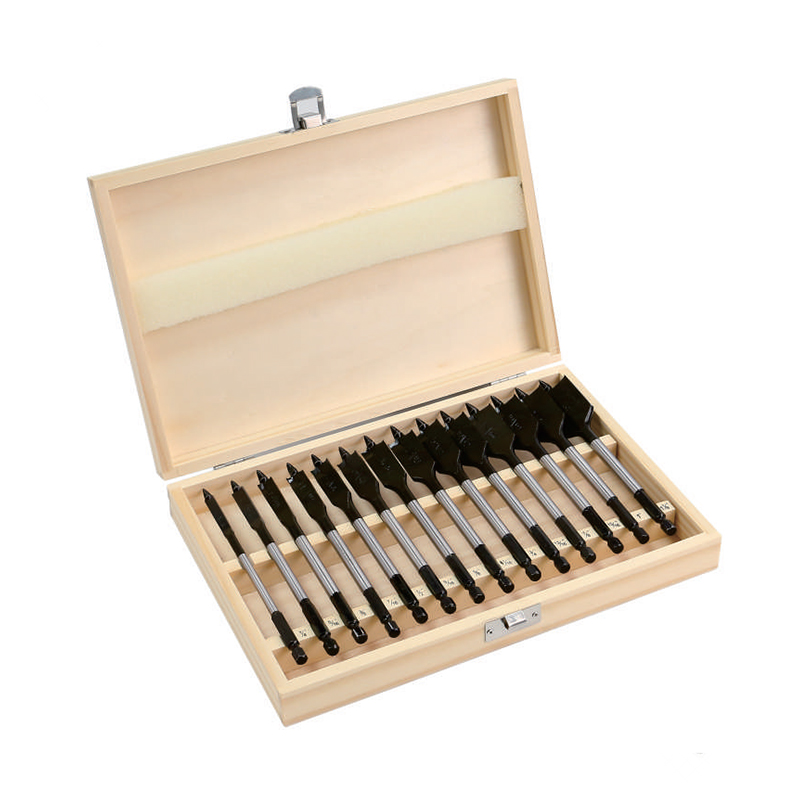
Spade bits take a different approach. Their flat cutting head removes material quickly and is commonly used for larger holes where a particularly clean finish isn't essential.
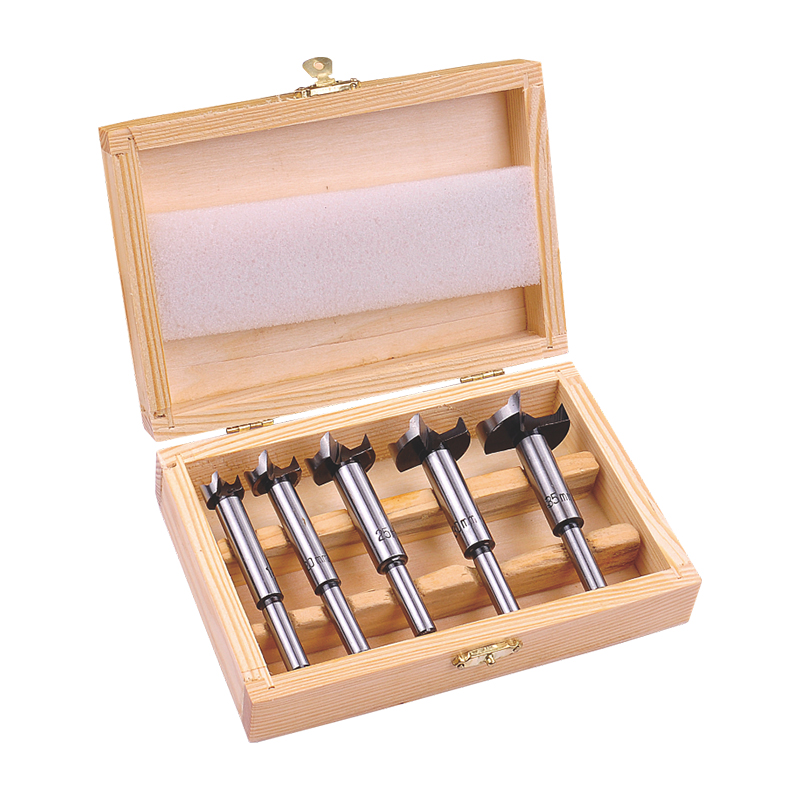
Forstner bits have a center point and a circular cutting rim. They are useful for making flat-bottomed recesses, such as those needed for concealed cabinet hinges.
Cutting Edge Geometry Affects Hole Quality
The cutting edges determine how the wood is separated. Their sharpness, angle, and symmetry influence cutting resistance and the finish around the hole.
Take a brad-point bit as an example. Its outer spurs cut the perimeter first, reducing the chance of fibers breaking away as the center removes material. If these spurs are uneven or poorly sharpened, the hole may have rough edges even when the bit is correctly positioned.
A narrow cutting angle generally needs less force to penetrate the material, but the edge may be more vulnerable to damage. A stronger edge geometry can handle tougher conditions but may require more pressure during drilling.
Flutes Need to Clear Chips Efficiently
The spiral grooves along a drill bit are not just part of its shape. They provide a route for wood chips to escape from the hole.
If chips accumulate around the cutting edges, friction increases. The bit can become hot, drilling slows down, and wood may start to burn.
Several flute characteristics affect chip removal:
When drilling deep holes, pulling the bit out occasionally helps clear the flutes. Continuing to drill with packed chips can cause overheating or even jam the bit.
Diameter and Length Affect Drilling Stability
Large-diameter bits remove more material and generally need greater cutting force. Long bits create another challenge: they are more likely to bend or wander when pressure is applied.
This is particularly noticeable when drilling hardwood without a drill press. If the bit starts deflecting, the hole may come out at an angle or have a larger diameter than intended.
| Geometry feature | Function | Effect on drilling |
|---|---|---|
| Center point | Locates the drilling position | Reduces wandering |
| Outer cutting spurs | Score wood fibers | Cleaner hole edges |
| Cutting lips | Remove material | Control cutting action |
| Flutes | Carry chips away | Reduce chip buildup |
| Bit diameter | Determines hole size | Affects cutting force |
| Overall length | Provides drilling reach | Influences rigidity |
Different Bits for Different Jobs
A Set of Wood Drill Bits may contain several designs because woodworking tasks don't all require the same type of hole.
| Drill bit type | Design feature | Where it is commonly used |
|---|---|---|
| Brad-point | Center spur and outer cutting edges | Furniture and cabinet drilling |
| Twist bit | Conical tip and spiral flutes | General woodworking |
| Spade bit | Flat cutting head | Larger holes and rough drilling |
| Forstner bit | Circular rim and center point | Hinge recesses and flat-bottomed holes |
For example, a cabinetmaker fitting concealed hinges will normally reach for a Forstner bit rather than a standard twist bit. When drilling shelf-pin holes that need to line up accurately, a brad-point bit is more suitable.
Wood Type Changes the Way a Bit Cuts
Softwood is generally easier to drill than dense hardwood, but grain direction, knots, and moisture content can change the cutting resistance.
Plywood presents a different problem. Its layered construction and thin outer veneer can chip when the drill exits the opposite side. A backing board underneath the panel helps support the fibers and reduces breakout.
A few practical adjustments make a difference:
Manufacturing Accuracy Makes a Difference
The shape of a drill bit is only useful when it is manufactured accurately. An off-center tip, uneven cutting edges, or poorly formed flutes can cause vibration and inconsistent hole sizes.
For manufacturers, controlling point symmetry, concentricity, grinding angles, flute dimensions, and heat treatment is essential. These details influence how each bit performs and whether different sizes within the same set deliver consistent results.
Buyers should look beyond the number of pieces in a set. Check diameter tolerances, cutting-edge finish, hardness consistency, and actual drilling results. Clear size markings and a case that protects the cutting edges are also practical details worth considering.
When buying a Set of Wood Drill Bits, start with the holes you actually need to make. Brad-point bits suit accurate furniture drilling, Forstner bits handle recessed fittings, and spade bits are useful when larger holes need to be made quickly. The right combination of geometries is more useful in the workshop than a large set of bits that rarely get used.
KEEP IN ToUCH

Rongcheng specializes in manufacturing and exporting wood planer bits, auger bits, shovel bits, spade bits, chisels, hammer bits and carbide, etc.
contact us
Address: Shangbutou, Qingjiang, Yueqing, Zhejiang, China
Tel: +86-577-62271200
FAX: +86-577-62276882
E-mail: [email protected]
Follow us

Carbide Hammer Drill Tools Manufacturer

 English
 русский
 Español
 中文简体