2026-06-19
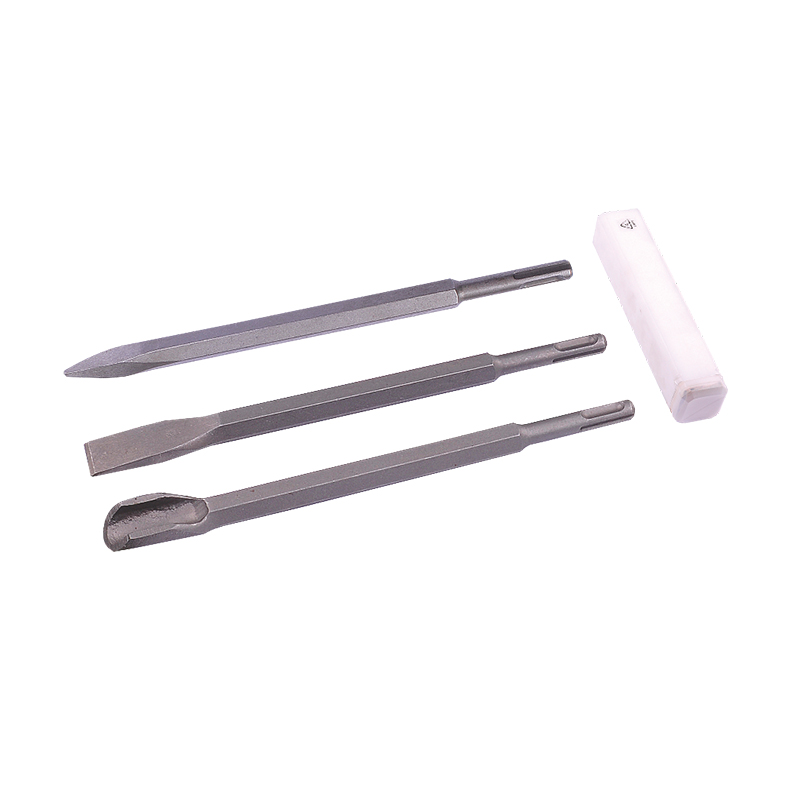
In industrial purchasing, the focus is often placed on what a tool can do. But when sourcing moves into long-term cooperation, attention gradually shifts toward where the product comes from and how it is actually produced. SDS Plus hammer drills are a typical example. Their performance in real use is closely tied to how stable the factory behind them operates.
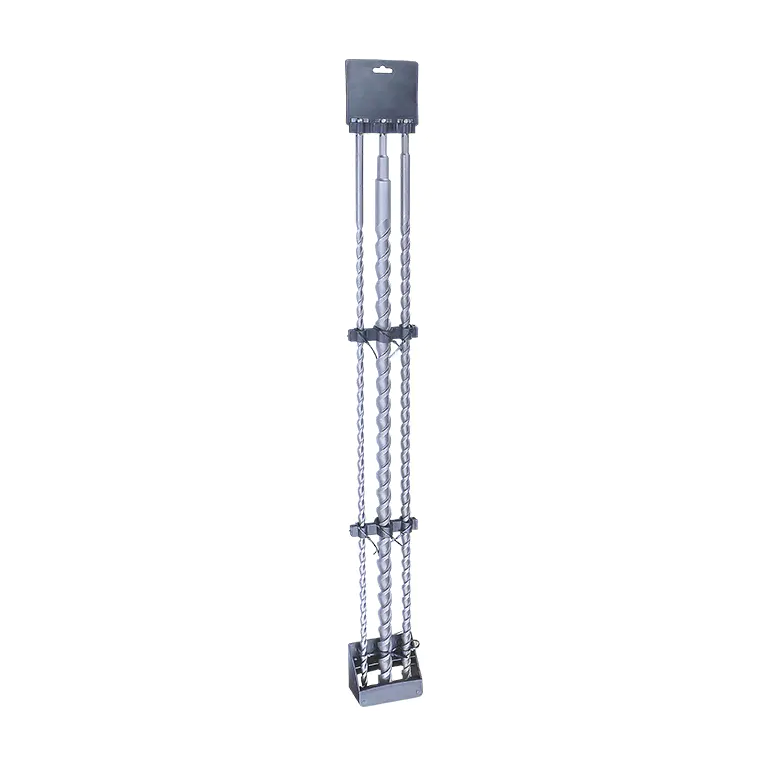
Factories with long production history tend to develop their own working rhythm. It is not something written in manuals. It comes from repeated output, adjustments over time, and countless small corrections during daily manufacturing. Over time, this rhythm becomes part of how the SDS Plus Hammer Drill Factory behaves.
Experience in manufacturing is not just about how many years a factory has existed. It is more about how often it has gone through similar production cycles and how it reacts when conditions change.
Some factories build familiarity with repeated orders. Others slowly develop a sense of what tends to go wrong and how to avoid repeating the same issue. This kind of awareness is usually not obvious from the outside, but it shows up in the stability of output.
There is also a difference in how information is handled internally. In more experienced environments, production knowledge is rarely isolated in one person or one department. It spreads through routine, through repetition, and through small corrections that gradually become standard behavior.
A rough comparison can be seen below:
| Area | Less experienced setup | More experienced setup |
|---|---|---|
| Daily workflow | Changes often | More settled patterns |
| Output behavior | Noticeable variation | Narrower variation range |
| Response to change | Trial-based reaction | Familiar adjustment |
| Planning stability | Uncertain | More predictable |
None of this means everything is fixed or rigid. It simply reflects how repeated experience shapes decision-making inside production environments.
When sourcing SDS Plus hammer drills, consistency often matters more than appearance differences. Tools may look similar, but small variations in assembly or internal alignment can affect how they feel during long use.
Experienced factories usually do not treat consistency as a single target. It is more like a side effect of stable routines. When the same steps are repeated in a controlled way, output naturally becomes more even.
This is especially relevant for bulk supply. When one batch behaves differently from another, downstream handling becomes more complicated. Storage, distribution, and even user feedback can be affected.
Consistency does not mean everything is identical. It means differences stay within a range that is expected and manageable.
Material decisions are not always visible in the final product, but they influence how stable the tool feels over time. Experienced factories tend to rely on familiar material pathways rather than frequent changes.
Over time, they observe how different material behaviors respond under repeated production cycles. Some combinations remain stable. Others may introduce small variations that only become noticeable after usage.
Instead of constantly changing inputs, experienced factories often prefer controlled adjustments. This helps keep output behavior steady even when external sourcing conditions shift.
Material handling also affects how predictable the final tool feels. When internal structure behaves consistently, users tend to perceive it as more reliable, even without knowing why.
Inside a factory, workflow is rarely a fixed diagram. It is more like a pattern that evolves slowly over time.
In more experienced environments, this pattern becomes smoother. Steps between assembly, adjustment, and checking are less likely to interrupt each other. There is less back-and-forth because most situations have already been encountered before.
When workflow is stable, production feels more continuous. Materials move without unnecessary pauses, and coordination between teams becomes more natural.
In contrast, unstable workflows often require frequent correction. Each change slows down the overall rhythm, even if the final output is still acceptable.
Customization is often seen as flexibility, but in real production it needs structure to work properly. Otherwise, it can easily disrupt the entire workflow.
Experienced factories usually handle customization in a controlled way. Instead of rebuilding processes each time, they adjust within existing frameworks. This reduces confusion and keeps production moving.
They also rely on past cases. If a similar adjustment has been made before, it becomes easier to estimate how new changes will behave.
What matters most is not the scale of customization, but whether it can be integrated without disturbing the overall flow.
In some factories, quality checking is treated as a final step. In more experienced environments, it is spread across multiple stages.
Instead of waiting until the end, inspection happens gradually. Small issues are noticed earlier, which reduces larger corrections later.
Over time, this creates a kind of feedback loop. Production adjusts based on what has already been observed, not only what is measured at the end.
This approach also makes results easier to interpret. When checking methods stay consistent, patterns become more visible.
A large part of sourcing success depends on how clearly information moves between teams.
Experienced factories usually do not rely on one communication channel. Information is repeated in different forms so that important details are not missed.
They also become more familiar with different ways clients describe requirements. Over time, interpretation becomes smoother, even when instructions are not highly detailed.
When issues appear, communication speed matters. A well-established system reduces delay between identifying a problem and responding to it.
Working with an experienced production setup does not remove risk completely, but it tends to reduce uncertainty in practical ways.
Unexpected changes in output become less frequent. Production flow is easier to predict. Planning does not need constant correction.
There is also less confusion between stages of production. Teams understand how their work connects with others, which reduces misalignment.
Even when adjustments are needed, they are usually absorbed into existing routines rather than causing disruption.
In real sourcing environments, this kind of stability often matters more than any single product feature.
KEEP IN ToUCH

Rongcheng specializes in manufacturing and exporting wood planer bits, auger bits, shovel bits, spade bits, chisels, hammer bits and carbide, etc.
contact us
Address: Shangbutou, Qingjiang, Yueqing, Zhejiang, China
Tel: +86-577-62271200
FAX: +86-577-62276882
E-mail: [email protected]
Follow us

Carbide Hammer Drill Tools Manufacturer

 English
 русский
 Español
 中文简体
中文简体