2025-11-07
Concrete is a tough construction material, composed of cement, aggregates, and often reinforced with steel bars. When the SDS Plus Hammer Drill is used to drill concrete, it must not only rotate the bit but also deliver rapid hammering power to break down the dense structure. Efficiency in this task depends on the ability of the hammer mechanism to generate sufficient impact energy while maintaining steady rotation. Professional users often note that the SDS Plus system delivers a balanced performance suitable for both general construction tasks and home renovation projects. Compared with lightweight rotary drills, it offers meaningful improvements by combining percussion force with rotational cutting to penetrate concrete more effectively. However, it is also lighter and more ergonomic than larger SDS Max systems, making it a preferred option for users prioritizing maneuverability and comfort over extreme power.
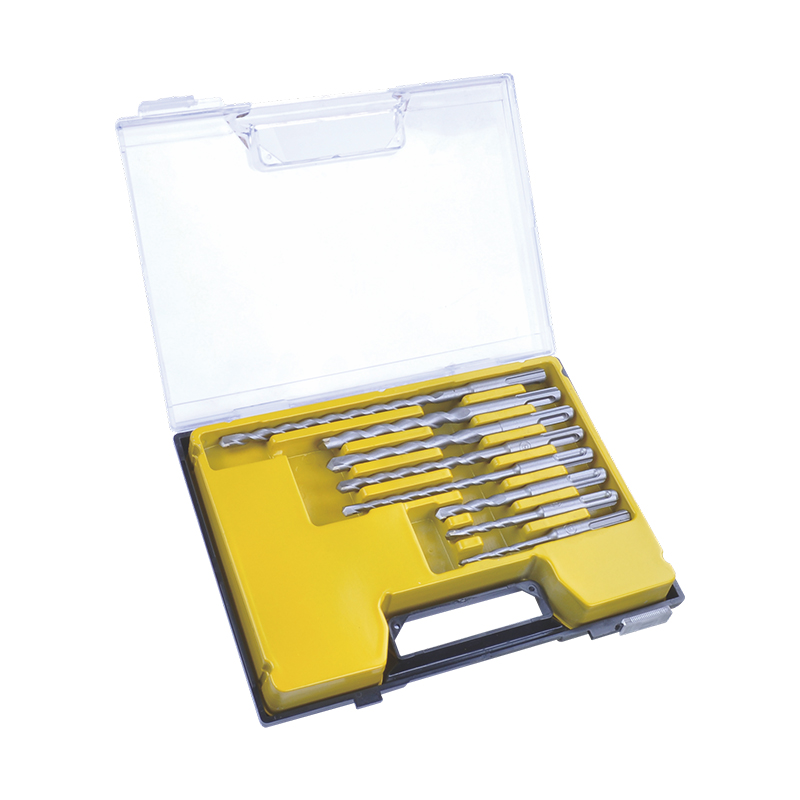
Drilling efficiency in concrete is largely influenced by impact energy, which determines how forcefully the hammer piston strikes the drill bit. SDS Plus machines typically deliver moderate impact force, often ranging from 1.5 to 3.5 joules depending on the specific model. This level of power allows fast penetration into standard concrete surfaces, especially when paired with high-quality carbide-tipped bits designed for hammer drilling. Rotation speed also plays a major role, as sufficient revolutions help the bit carve away loosened debris created by the hammer action. When suitable impact and rotation performance work together, hole creation becomes quick and smooth, reducing heat buildup and extending the life of both the tool and drill bits. This dual-action system is one of the reasons the SDS Plus platform is widely adopted in construction fields where repetitive medium-duty drilling is required.
To analyze efficiency in context, it is useful to compare the SDS Plus mechanism with alternative drilling solutions. Traditional rotary drills lacking hammer action struggle considerably when drilling concrete, as they rely solely on rotational friction. This results in slow progress, overheating bits, and excessive strain on both user and machine. Impact drills may provide some assistance through vibration, but they still cannot match the dedicated hammer piston mechanism found in SDS systems. Conversely, SDS Max tools are more powerful but also heavier, making them overkill for many routine tasks and more fatiguing during prolonged use. In this balance of performance, weight, and comfort, the SDS Plus platform stands out as an effective middle-ground solution. It provides enough power for efficient productivity without overwhelming operators or requiring oversized components, making it suitable for repeated drilling in standard concrete applications.
Even with an efficient hammer drill mechanism, real-world performance depends on tool condition, drilling technique, and bit quality. Using worn or inexpensive bits can significantly reduce drilling speed and cause the tool to work harder. Carbide-tipped drill bits specifically engineered for hammer drills ensure suitable efficiency by cutting through concrete cleanly and resisting impact abrasion. Operator technique also influences results; applying moderate pressure, allowing the hammer action to perform the majority of work, and periodically removing dust from the hole improve overall drilling speed and precision. Overloading the drill with excessive force can actually slow penetration and increase wear. Additionally, proper lubrication and dust-control practices contribute to sustained efficiency, especially in professional environments where concrete drilling is a regular task.
Based on mechanical design, energy delivery, and user-centered engineering, the SDS Plus platform offers a high level of efficiency for drilling concrete surfaces in most construction and renovation scenarios. While it may not match the brute power of industrial-grade systems, its balanced performance makes it one of the versatile and reliable solutions for medium-duty drilling tasks. When combined with appropriate bits, correct drilling technique, and well-maintained equipment, it enables operators to complete concrete drilling projects quickly and with less fatigue, providing a favorable combination of speed, durability, and usability.
KEEP IN ToUCH

Rongcheng specializes in manufacturing and exporting wood planer bits, auger bits, shovel bits, spade bits, chisels, hammer bits and carbide, etc.
contact us
Address: Shangbutou, Qingjiang, Yueqing, Zhejiang, China
Tel: +86-577-62271200
FAX: +86-577-62276882
E-mail: [email protected]
Follow us

Carbide Hammer Drill Tools Manufacturer

 English
 русский
 Español
 中文简体
中文简体