2026-07-03
China Hammer Drill Bit is often grouped together in catalogs, but in real use they behave quite differently. The gap between a hammer drill bit and a standard drill bit becomes obvious once they meet different materials and working conditions.
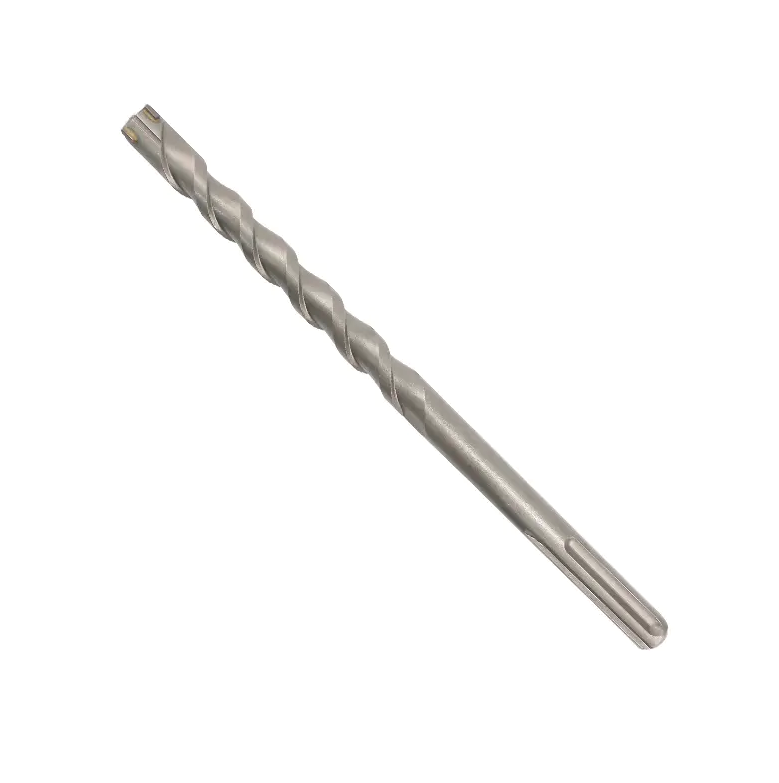
At first glance, both look like simple metal tools. They rotate, they cut, and they form holes. But the way they interact with surfaces is not the same. That difference shapes speed, durability, control, and even the comfort of operation.
Understanding this comparison helps avoid tool mismatch, especially in construction, renovation, and mixed-material projects.
A standard drill bit is built for steady cutting. It relies on continuous rotation to shave or slice through material layers. This works well when the material is soft or moderately resistant.
A hammer drill bit is designed for impact-assisted drilling. Instead of only cutting, it adds a forward striking motion during rotation. This repeated impact helps break harder surfaces into smaller fragments.
Because of this difference in working principle:
This is the foundation of their performance gap.
The most noticeable difference comes from movement style during operation.
Standard drill bits:
Hammer drill bits:
This change in motion directly affects how fast and stable drilling feels in practice.
Material is the main factor in tool selection. Different surfaces react differently to cutting and impact.
Standard drill bits are commonly used on:
Hammer drill bits are used on:
The reason is simple. Soft materials respond well to smooth cutting. Hard materials resist cutting and respond better to repeated breaking force.
Using the wrong type may not stop the process completely, but it often makes drilling slower and less stable.
Although both tools look similar externally, their internal structure is designed with different stress conditions in mind.
Standard drill bits are shaped for clean cutting paths. Their structure supports smooth entry and consistent removal of material chips.
Hammer drill bits are reinforced to handle repeated impact pressure. Their design focuses on maintaining stability even under forceful contact with hard surfaces.
Key structural differences include:
| Feature | Hammer Drill Bit | Standard Drill Bit |
|---|---|---|
| Working style | Rotation + impact | Rotation only |
| Main function | Breaking hard material | Cutting soft material |
| Stress handling | High impact resistance | Moderate cutting stress |
| Application focus | Construction environments | General workshop use |
| Material behavior | Fragmentation | Smooth removal |
These structural choices explain why each type performs better in its intended environment.
There's no single perfect rotation speed that fits all bits. The right pace always depends on how the bit cuts into whatever material you're working on.
Regular drill bits can spin faster when drilling soft substances. Cutting goes smoothly with very little pushback from the material.
Switch to hard dense materials, and these standard bits have to run much slower. Their cutting edges fight hard to strip away thick, tough layers.
Hammer bits work in a totally different way. They don't just cut; constant hammer blows chip the material apart as they spin. This lets them keep a steady drilling rate even on rigid surfaces.
You'll notice clear speed gaps between the two styles:
How quickly a bit wears down ties to the material you drill and how the bit operates.
Running a standard bit on hard surfaces puts heavy strain on its sharp edges. The tip dulls fast, and drilling gets slower as a result.
Hammer bits won't wear rapidly on soft materials, yet they won't create neat, clean holes like regular bits either.
Typical signs of worn drill bits:
Using the correct bit matched to your workpiece keeps bits sharp longer and delivers steady drilling results.
Control is another important difference between the two tools.
Standard drill bits provide smoother handling in soft materials. The operator can guide the drill easily, and the cutting path remains predictable.
Hammer drill bits feel more active during operation. The impact motion adds vibration and force, especially when entering hard surfaces.
This leads to different user experiences:
The choice depends on whether the priority is finish quality or penetration ability.
Drill bit performance is not only about the bit itself. The drill machine also plays a key role.
Hammer drill bits require a machine that supports impact function. Without it, they behave like standard bits but lose their main advantage.
Standard drill bits work with most basic rotary drills without additional functions.
Compatibility factors include:
A mismatch between tool and machine often leads to inefficient drilling or uneven performance.
Your actual working setting heavily shapes which drill bit works best for you.
Construction sites are full of hard, uneven building materials. Hammer bits are the top pick here since they power through tough surfaces far easier.
Workshops and light assembly spaces have more predictable, softer stock, and clean precise holes are key. Standard drill bits fit these jobs much better.
Common working scenarios you'll encounter:
Every setting calls for different levels of drilling speed, accuracy and long-term bit toughness.
How much force you need to apply shifts based on the bit and material you drill.
If you use standard bits on hard stock, you have to push the drill firmly the whole time to keep cutting progressing.
Hammer bits cut down that physical strain on dense materials. The built-in pounding breaks up rigid surfaces, so you don't need to press as hard by hand.
That said, hammer action can feel rough on soft materials, and you'll need to steady the drill more carefully to avoid messy holes.
Several factors change how much effort drilling takes:
| Aspect | Hammer Drill Bit | Standard Drill Bit |
|---|---|---|
| Working method | Impact + rotation | Rotation only |
| Best material | Hard masonry surfaces | Soft to medium materials |
| Drilling feel | Strong and forceful | Smooth and steady |
| Speed in hard materials | Higher efficiency | Lower efficiency |
| Surface finish | Rougher result | Cleaner finish |
| Tool requirement | Impact drill needed | Basic drill sufficient |
What is the main difference between hammer drill bit and standard drill bit?
Hammer drill bits use impact plus rotation, while standard drill bits rely only on rotation.
Can hammer drill bits be used on wood?
They can be used, but standard drill bits usually give better control and cleaner results.
Why are standard drill bits slower on concrete?
Because they are not designed to break hard materials, only to cut softer ones.
Do hammer drill bits damage soft materials?
They may reduce precision because of impact motion, but not necessarily damage the material.
Are both types interchangeable?
Not in all cases. Using the correct type improves efficiency and reduces tool wear.
KEEP IN ToUCH

Rongcheng specializes in manufacturing and exporting wood planer bits, auger bits, shovel bits, spade bits, chisels, hammer bits and carbide, etc.
contact us
Address: Shangbutou, Qingjiang, Yueqing, Zhejiang, China
Tel: +86-577-62271200
FAX: +86-577-62276882
E-mail: [email protected]
Follow us

Carbide Hammer Drill Tools Manufacturer

 English
 русский
 Español
 中文简体
中文简体